


ANSI vs EN388: What You Must Know Before Importing Cut Resistant Gloves
Choosing the Wrong Standard Can Cost You More Than You Think
If you import cut-resistant gloves for construction, oil & gas, or industrial distribution, you’ve likely seen both:
-
ANSI ratings (A1–A9)
-
EN388 ratings (European standard)
But here’s the real issue:
Many buyers don’t fully understand the difference.
And misunderstanding protection levels can lead to:
-
Product returns
-
Failed safety audits
-
Liability risks
-
Lost contracts
Let’s simplify it.
What Is ANSI Cut Resistance?

ANSI (American National Standards Institute) uses levels:
A1 to A9
The higher the number, the higher the cut resistance.
For example:
-
A2–A3 → Light industrial tasks
-
A4–A6 → Construction & heavy handling
-
A7–A9 → High-risk environments (glass, metal stamping, oilfield)
ANSI testing uses gram force measurement with a TDM-100 machine, providing consistent, repeatable results.
If you are selling to North America, ANSI ratings are often mandatory.
What Is EN388?
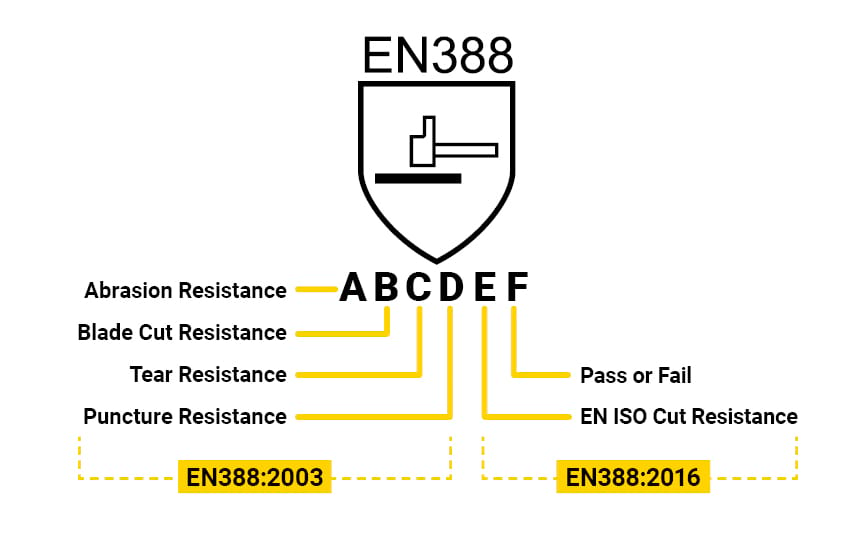
EN388 is the European standard for mechanical protection.
You’ll typically see a marking like:
EN388: 4X43D
Each number represents:
-
Abrasion resistance
-
Cut resistance (Coupe test)
-
Tear resistance
-
Puncture resistance
-
TDM cut level (A–F)
Important update:
The 2016 revision introduced TDM testing (A–F scale), which is more accurate for high-cut materials like HPPE.
If you are importing into Europe, EN388 compliance is essential.
Key Differences Importers Must Understand
| Factor | ANSI | EN388 |
|---|---|---|
| Primary Market | North America | Europe |
| Cut Scale | A1–A9 | A–F |
| Testing Method | TDM-100 | Coupe + TDM |
| Label Format | Simple level | Multi-factor code |
If your supplier cannot clearly explain:
-
Test reports
-
Lab source
-
Certification validity
-
Batch consistency
That’s a red flag.
Why Certification Stability Matters for Your Business
Many importers face problems like:
-
Gloves labeled A5 but test as A3
-
Inconsistent performance between orders
-
Expired CE documentation
-
Missing third-party reports
Certification inconsistency damages:
-
Your brand reputation
-
Distributor relationships
-
Compliance standing
Reliable manufacturers provide:
-
Updated CE certificates
-
ANSI lab test reports
-
Traceable batch documentation
-
Clear labeling compliance
Before you confirm your next bulk order, ask for documentation — not just promises.
How to Choose the Right Cut Level for Your Market
If you supply:
Construction companies → A4–A6 or EN388 D
Oil & Gas operators → A5–A7 or EN388 D/E
Metal fabrication → A6–A8 or EN388 E/F
General mechanical work → A2–A4 or EN388 C
Over-specifying increases cost.
Under-specifying increases risk.
The right balance protects both workers and your profit margins.
Final Advice for PPE Importers
Before importing cut resistant gloves, confirm:
-
Which market standard applies?
-
Are the test reports recent?
-
Is production batch-tested?
-
Can the supplier maintain consistency long-term?
Cut resistance is not just a number on the glove.
It’s your responsibility as a distributor.
If you understand ANSI and EN388 clearly, you protect:
-
Your customers
-
Your contracts
-
Your brand
-
Your business growth